You bought a dialer because manual dialing won't move a million voter contacts in 72 hours. Fine. But the same pacing math that made predictive dialers efficient in 2015 is now actively burning your numbers — because there's a new layer sitting between your dialer and the human, and most vendors haven't caught up.
That layer is the AI call screener built into modern iPhones and Pixels, plus the carrier-side spam screens from T-Mobile, Verizon, and AT&T. They answer the call. Your dialer thinks a human picked up. It bridges an agent in — except there's no human there yet, just a robot asking who's calling and why. By the time the screener hands the call to the actual person, your agent has been listening to silence for eight seconds and the voter has hung up. Multiply that by a GOTV weekend and you've trained three carriers to flag every number in your range.
Why pacing ratios broke
Predictive dialers play the odds. If 1 in 4 calls historically reaches a live person, the dialer fires four calls per available agent. When more than one answers at once, somebody waits. That's the dead-air window — the thing that's been annoying customers since call centers existed.
The old assumption was that "answer" meant a human said hello. That assumption is dead. Now "answer" can mean:
- A carrier screener picked up and is reading a script to your dialer
- An on-device AI is transcribing your agent's intro in real time
- A voicemail-to-text bot is pretending to be a person for three seconds before failing
- An actual human, who is now hearing five seconds of nothing
If your dialer can't tell the difference, every one of those scenarios counts as a connect, and your pacing algorithm thinks it's doing great while your real answer rate craters.
What dead air actually costs you on a campaign
One dropped call from a voter is nothing. The problem is the pattern. When a phone screener hears dead air or a delayed bridge repeatedly from the same caller ID, two things happen fast:
- The voter marks the number as spam, or their phone does it automatically.
- The carrier analytics platform (the system that decides whether your call shows up as "Spam Likely") notices a pile of short-duration, no-conversation calls and downgrades your reputation score.
By day three of a heavy push, your numbers are cooked. We've written before about how dead air and false answer supervision tank deliverability — the political cycle just compresses that timeline from weeks to days because the call volume is so concentrated.
What to demand from your dialer vendor before GOTV
Don't accept "we're working on it" three weeks out. Here's the short list of things your dialer has to do, and what to actually ask for in writing: if you're still in the buying phase, our checklist for evaluating a dialer for a political cycle covers DNC scrubbing, multi-line legality by state, and disposition workflows alongside the pacing concerns here.
Screening-aware answer detection
Ask the vendor flat out: "How does your system distinguish a carrier AI screener from a human answer?" If the answer is "we don't" or "we're adding that in Q2," you have a problem. Real answers look like:
- Extended AMD (answering machine detection) windows that listen past the first three seconds
- Pattern matching on known screener prompts ("state your name and reason for calling")
- A bridge-delay mode where the agent isn't connected until a human voice is confirmed
Pacing controls you can actually tune
You need to be able to lower the ratio mid-shift without filing a support ticket. Predictive at 2.5:1 on a clean list is fine; predictive at 2.5:1 on a list that's already been hit twice this week is suicide. Demand:
- Per-campaign pacing override
- Real-time abandon-rate dashboard (you want this under 3%, period)
- Ability to switch to power dial (1:1) for high-value lists like donors or low-propensity voters
Caller ID rotation and number health
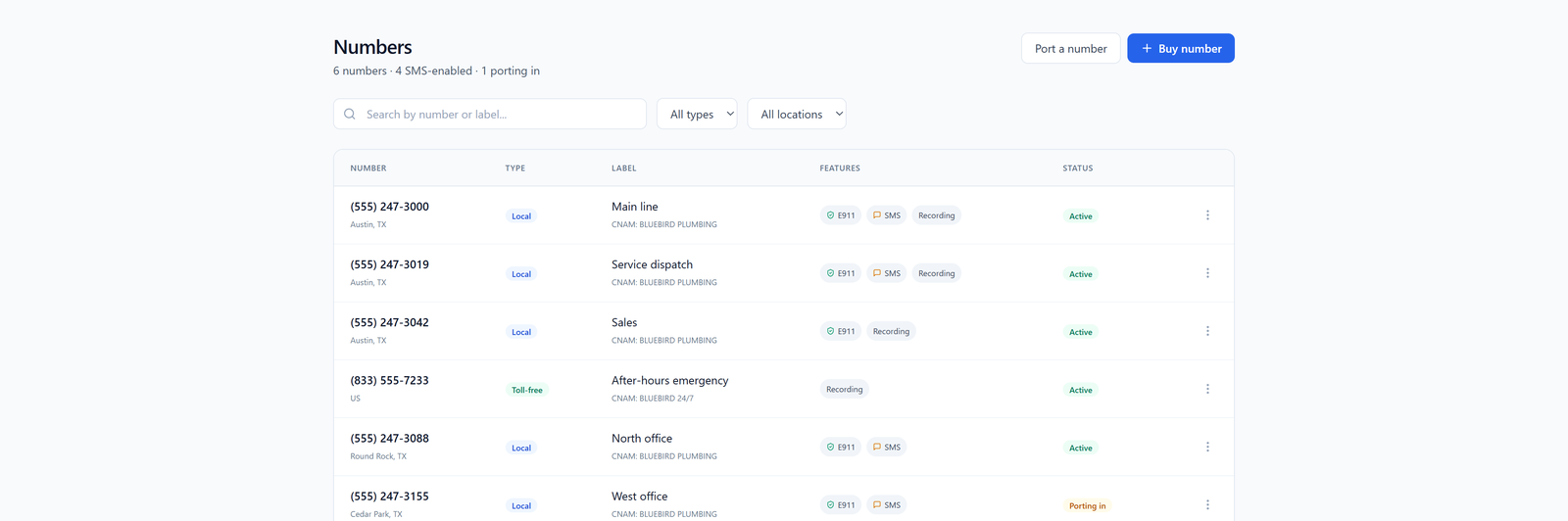
Your numbers will get flagged. The question is how fast you can swap them. If your dialer ties you to a fixed pool from your termination provider, you're stuck. You want hot-swap capability and ideally a bulk DID pool sized for rotation, not just for concurrency. For a deeper look at what actually burns campaign numbers and how carriers decide to flag them, the mechanics of rotation matter as much as the pool size. If you're not sure how many numbers to buy in the first place, we walk through the sizing and rotation math for a political dial window with concrete examples.
Honest reporting on completed conversations
"Connect rate" is a vanity metric if it counts screener pickups. Ask the vendor to show you completed conversation rate — calls where an agent talked to a human for more than 20 seconds. That's the number that actually correlates with voter contact, donations, and persuasion. For more on lifting that number with local caller ID, calling windows, and list hygiene, the levers outside the dialer matter as much as the ones inside it.
The pacing math for the final 72 hours
Here's the rough decision tree most campaigns should run during GOTV:
Set pacing by list quality. Cold or cold-ish list, power dial at 1:1. Warm list with recent contact, predictive at 1.5:1.
Watch the abandon rate. Over 3%, lower the ratio and rotate numbers. Under 3%, go to step 3.
Check spam flags. Rising, lower the ratio and rotate numbers. Steady, hold current pacing.
The instinct on day-of is to crank pacing because you're running out of time. Resist. A 4:1 ratio that lights up every carrier's spam filter by noon means your afternoon shift is dialing from dead numbers. You'd rather hit fewer voters with calls that actually connect than burn the whole inventory by lunch.
Don't blame the dialer for everything
A lot of what gets called "the dialer's fault" is actually upstream. If your SIP termination carrier is sending your traffic out with weak caller ID attestation — that's the carrier signing your calls as legit, on a scale from A (full trust) down to C (anonymous) — your calls show up flagged regardless of what the dialer does. If your DIDs were used for spammy traffic by the last reseller who held them, you inherited the reputation.
Before GOTV, run a sanity check:
- Pull a sample of your outbound numbers and dial them from a few personal phones on different carriers. Do they show "Spam Likely"? Branded? Clean?
- Ask your provider for the attestation level on your termination. If you're getting B or C, find out why.
- Review answer rate trends and how STIR/SHAKEN flagging works so you know what you're actually looking at.
What to do next
Three weeks before your final push, do this in order:
- Get a written answer from your dialer vendor on screening detection. If it's vague, start shopping.
- Audit your number pool. Replace anything already flagged. Build in rotation headroom — assume you'll lose 20% of your inventory during the heavy push.
- Lock in a termination provider that can scale concurrency for a 72-hour window without throttling you, and that gives you a real human to call when something breaks at 9pm on a Sunday.
- Lower your pacing ratio by default and let abandon rate tell you when to push.
If you're still finalizing vendor contracts, our list of questions to ask dialer and carrier vendors before committing to the cycle covers the surge-capacity and deliverability terms worth pinning down in writing.
The campaigns that win the dialer war in the last week aren't the ones with the most calls placed. They're the ones whose calls actually got answered by humans and stayed connected long enough to count.